In the most general terms, a print is a piece of paper on which a design has been
imprinted from a matrix made of some selected medium, usually stone, wood, or metal.
Prints fall into three general categories depending on their method of production: relief, intaglio, and planographic.

Relief Prints
In a relief print the image is printed from a raised surface on the matrix, so that
the printmaker creates the matrix by cutting away that part which he does not
want to show in the image. To create a relief print the ink is applied to the raised
surface of the matrix, which is then pressed onto a sheet of paper.

Relief printing is quite simple, it is just about printing from a raised surface. Take a flat piece of wood, and cut in to it as in the photo above. Lower the surface of the negative shape and so create a surface in relief. The positive shape or uncut area can now have ink applied to it.

A flat and even layer of ink is rolled out using a roller onto a flat, clean surface called the inking slab.

The ink is then transferred from the slab to the raised surface of the block using the same roller. This is called inking up the block.
A piece of paper is then placed over the block and pressure is applied either by rubbing with a spoon, or putting the block and paper through a hand printing press. The paper is then peeled back; this is called pulling the print. And so a relief print is made.
Intaglio Prints
In an intaglio print the image is printed from a recessed design in the matrix, so
that the printmaker creates the matrix by cutting into it the design he wishes to


imprint on the paper.
To create an intaglio print the ink is pressed into the design
cut in the matrix, the surface is wiped, and the ink is then transferred to the paper
under pressure.
Planographic Prints
In a planographic print the image is printed from a flat matrix, where the image
was created on the surface by use of a grease crayon or with greasy ink (called
Tushe).
To create a planographic print, water (which is repulsed by the greasy
image) is washed onto the surface, and then ink (which is held by the greasy
image) is applied to the surface. A press is then used to transfer the image to the
paper.
The earliest known printed books were produced using wooden blocks with the text
carved on them which was then used as a printing plate.
These "plates" were produced in much the same manner as those for wood engravings -- except instead of an "picture“ carved into them, the actual text of a page of a book was carved into them.
The earliest dated printed book known is the "Diamond Sutra", printed in China in 868 AD. However, it is suspected that book
printing may have occurred long before this date.
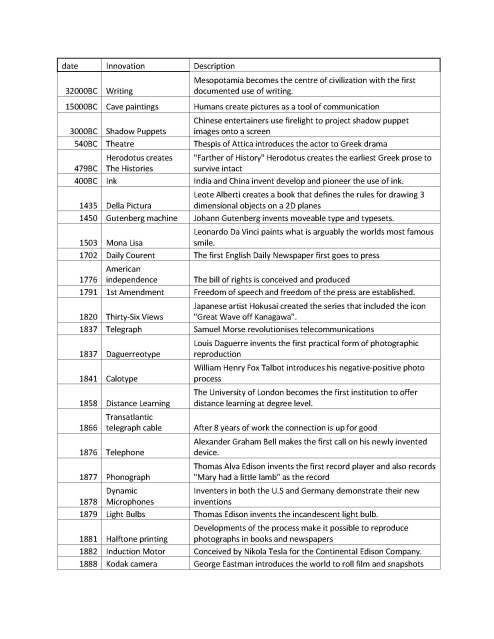
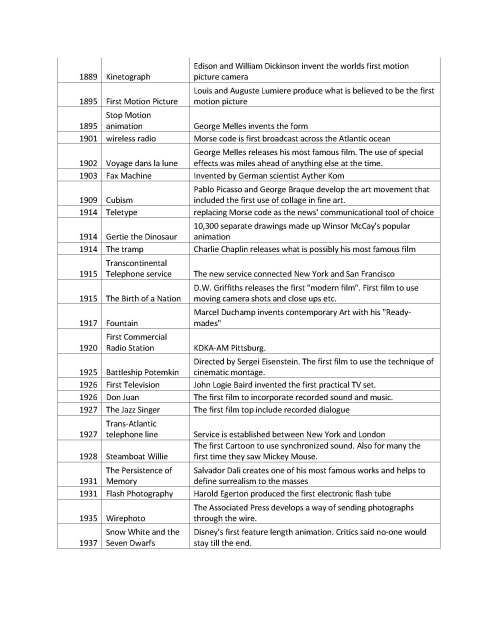
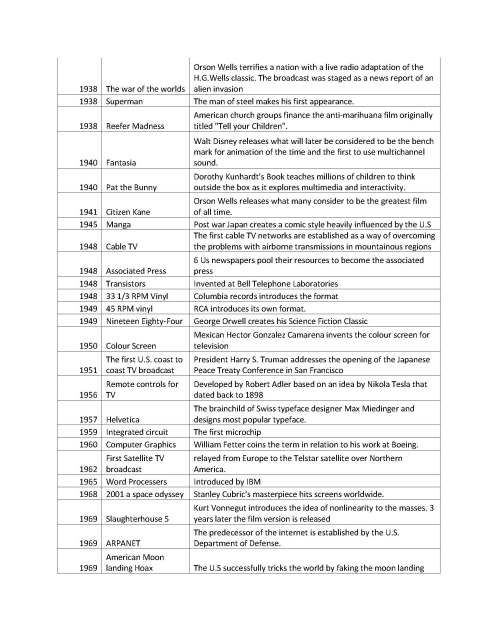
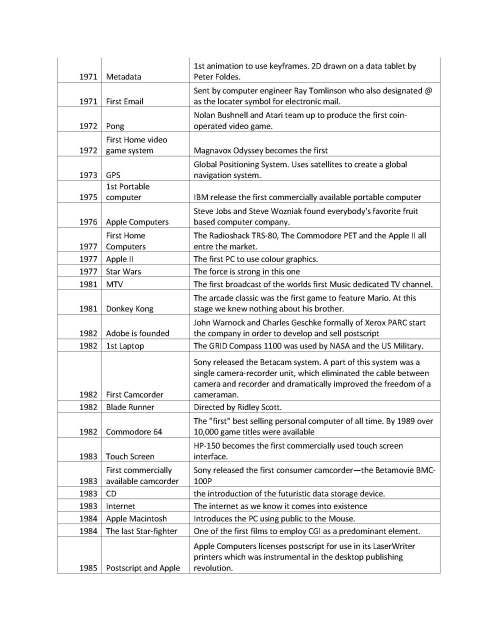
Before Gutenberg, printing was limited in the number of editions made and nearly exclusively decorative, used for pictures and designs. Books were hand copied mostly by members of religious orders.
Johannes Gutenberg


The earliest dated printed book known is the "Diamond Sutra", printed in China in
868 CE. Suspected that book printing may have occurred long before this date.
In 1041, movable clay type was first invented in China.
Johannes Gutenberg, a goldsmith and businessman from the mining town of Mainz in southern Germany, borrowed money to invent a technology that changed the world of printing.
He invented the printing press with replaceable/moveable wooden or metal letters in 1436 (completed by 1440).
The Gutenberg press with its wooden and later metal movable type printing brought down the price of printed materials and made such materials available for the masses.
It remained the standard until the 20th century. The Gutenberg printing press developed from the technology of the screw-type wine presses of the Rhine Valley.
It was there in 1440 that Johannes Gutenberg created his printing press, a hand press, in which ink was rolled over the raised surfaces of moveable hand-set block letters held within a wooden form and the form was then pressed against a sheet of paper.
Gutenberg Bible
Johannes Gutenberg is also accredited with printing the world's first book using movable type, the 42-line (the number of lines per page) Gutenberg Bible.
During the centuries, many newer printing technologies were developed based on
Gutenberg's printing machine e.g. offset printing.
Lantape Paulo VincenteRuiz
Fred Sirhyan Cho
Mony Kandarung
Khim Sambath
Sokhan Sophearith
Touch Sokunthea
Loh Ming Lvan (Michal)
Hun Vannak
group 2
Sen Tharo
Sela samreth
Set Lyna
Sok Tha
Ieng Sunsolyna
Ir Chhay Hout
Kang M Youra
Sao Vannaroth

